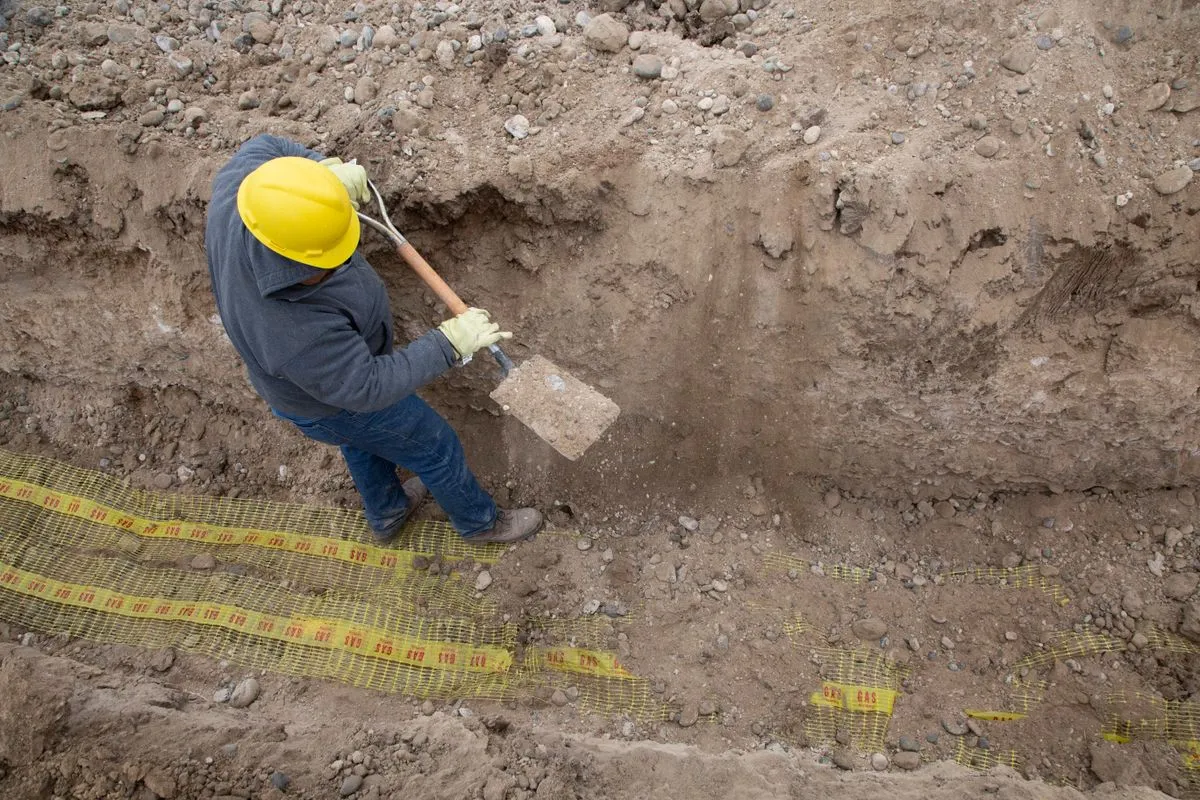
A trench a few feet deep here usually meets groundwater. We dig in short runs, pump as we go and backfill fast, so the plumber can bed the pipe and the ground does not cave.
Trenching in New Orleans almost always means working near groundwater. A trench a few feet deep often fills with seepage, and soft clay walls can slump if left open. We keep trenches short, shore or slope the deeper ones, pump out water and backfill quickly, so the pipe is bedded properly and the street or yard does not cave in later.
We dig for sewer laterals, water service lines, gas lines, electric conduit and drain lines. Pipe depth and bedding are set by the licensed trade doing the connection. Because the ground keeps settling, many sewer lines in older homes have sagged or pulled apart at the house, and replacing them often means digging under or beside a raised house or a slab.
Every dig starts with a Louisiana 811 notice at least 48 hours ahead, not counting weekends and holidays. The utilities mark their lines, but the private lines on your side are your responsibility: a line to a back cottage, a sprinkler main or an old gas line to a grill. We ask what you know is buried and hand dig near anything we cannot confirm.
Trenching & utilities in New Orleans: common questions
Why do sewer lines break at the house?
The house often sits on piles or a slab that settles less than the soil around it, so the pipe bends and cracks where it meets the house.
Can you dig when the trench fills with water?
Yes. We pump it out as we go, keep trenches short and backfill the same day where we can.
Do you connect the pipe?
No. Plumbing and electrical connections are done by licensed plumbers and electricians. We dig and backfill.
How it works
- Free estimate: Call, text or book online. We walk the site with you.
- Written quote: Scope, equipment and price in writing.
- Utility locate & plan: We have utilities marked and plan access, haul-off and erosion control.
- Dig, grade & clean up: We complete the work, grade the site and haul away spoil.